
Key Takeaways
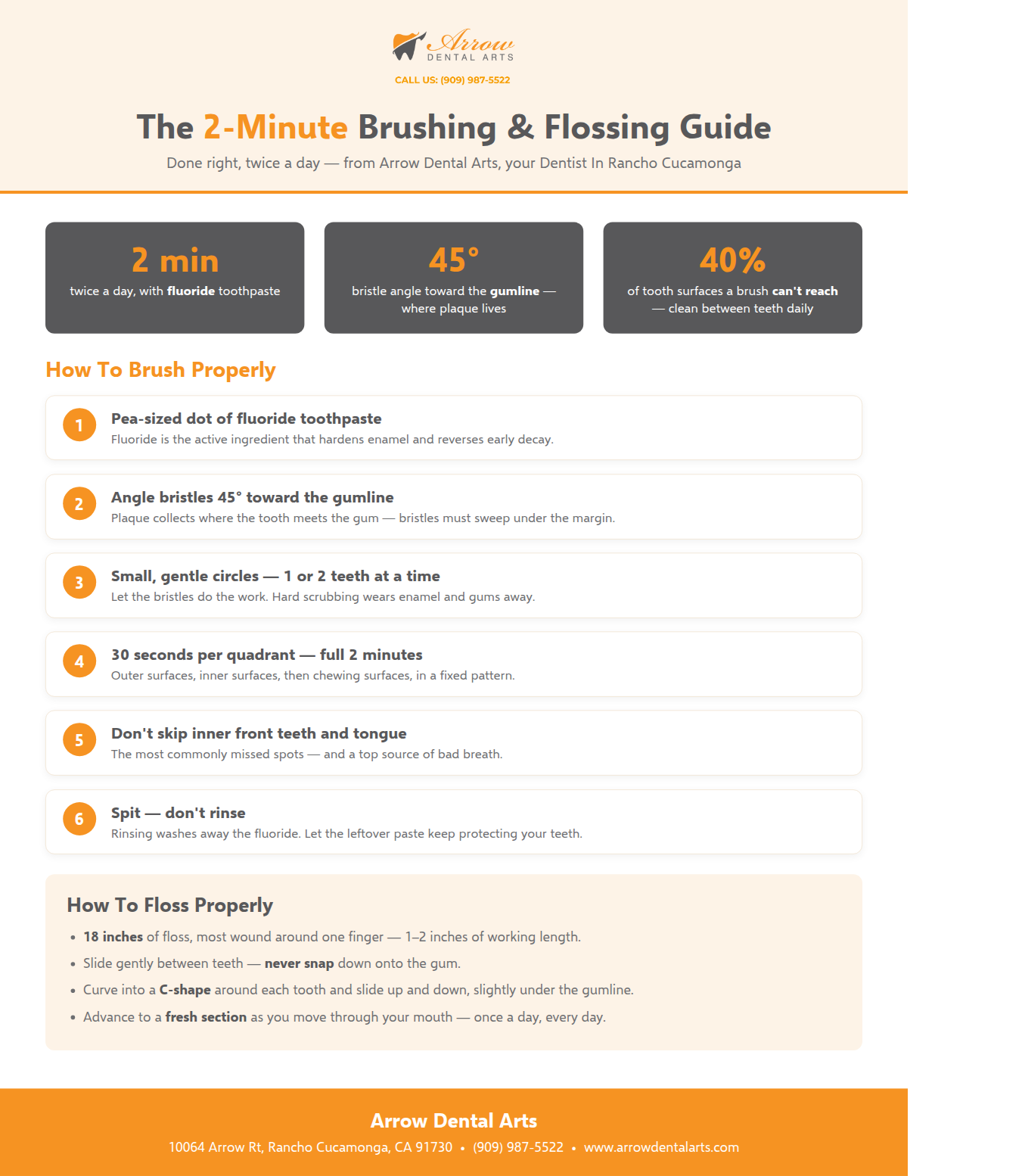
- Brush twice a day for two full minutes with fluoride toothpaste — the fluoride in the paste, not the brush itself, is what prevents cavities.
- A toothbrush only reaches about 60% of each tooth’s surface; cleaning between your teeth once a day is non-negotiable for the other 40%.
- Gentle 45-degree-angle strokes at the gumline beat hard scrubbing — aggressive brushing wears away enamel and causes gum recession.
- Both manual and electric brushes work when used properly; electric models with built-in timers have an edge for most people.
- Arrow Dental Arts — the Dentist In Rancho Cucamonga families recommend for gentle, judgment-free checkups — is happy to coach your technique at your next visit.
You have brushed your teeth thousands of times — but are you doing it right? Most patients are surprised to learn that technique matters more than the tool, and that a few small habits (scrubbing too hard, rushing the two minutes, skipping between the teeth) quietly cause most of the cavities and gum problems we treat. This step-by-step guide from the Dentist In Rancho Cucamonga team at Arrow Dental Arts covers exactly how to brush, how to floss, the mistakes to avoid, and how often you actually need professional cleanings.
Table of Contents
Why Technique Matters More Than Tools
Tooth decay and gum disease are both driven by one thing: plaque — a sticky film of bacteria that reforms on your teeth every 24 hours. Your job twice a day is simple mechanical removal of that film from every surface, especially the gumline where inflammation starts. Doing that well does not require an expensive brush; it requires two minutes of methodical, gentle work with fluoride toothpaste. Doing it badly — fast, hard, and only on the chewing surfaces — leaves plaque at the gumline while wearing down the enamel you are trying to protect.
How To Brush Your Teeth Properly, Step by Step
- Use the right amount of the right paste. A pea-sized dot of fluoride toothpaste for adults (a rice-grain smear for children under 3). Fluoride is the active ingredient that hardens enamel and reverses early decay — brushing without it does not carry the same protection.
- Angle the bristles 45 degrees toward the gumline. This is the step most people miss. Plaque collects right where the tooth meets the gum, and the bristles need to reach slightly under the gum margin to sweep it away.
- Brush in small, gentle circles — one or two teeth at a time. Let the bristles do the work. If you see bristles splaying or your gums bleed from pressure, you are scrubbing too hard.
- Follow a fixed pattern for two minutes. Spend 30 seconds per quadrant: outer surfaces, inner surfaces, then chewing surfaces. The ADA notes two minutes works out to roughly 30 seconds per quadrant — most people finish in under 45 seconds total.
- Don’t forget the inner front teeth and your tongue. The inside surfaces of the front teeth and the back of the tongue are the most commonly skipped spots — and a major source of both decay and bad breath.
- Spit, don’t rinse. Rinsing with water right after brushing washes away the concentrated fluoride. Spit out the excess and let the remaining paste keep working. (It is also best to avoid eating or drinking for 30 minutes afterward.)
How To Floss Properly
Brushing reaches only about 60% of each tooth’s surface — the spaces between teeth hold the rest, and that is where most cavities between teeth and gum disease begin. Here is the technique we teach:
- Break off about 18 inches of floss and wind most of it around one middle finger, with an inch or two working length between your hands.
- Slide the floss gently between two teeth using a back-and-forth motion — never snap it down onto the gum.
- At the gumline, curve the floss into a C-shape around one tooth and slide it up and down the root surface, going slightly under the gum.
- Repeat on the neighboring tooth with a fresh section of floss, then advance to a clean segment as you move through your mouth.
- If traditional floss is a struggle, interdental brushes or a water flosser are proven alternatives — the best method is the one you will actually use daily.
The 6 Most Common Brushing Mistakes
- Brushing too hard. Causes enamel wear and gum recession — the leading cause of tooth sensitivity in adults under 40.
- Rushing under two minutes. The timer matters more than you think.
- Using a toothbrush past its prime. Replace it every 3–4 months, or when bristles fray.
- Skipping the gumline and inner surfaces. Where plaque persists, problems follow.
- Brushing immediately after acidic food or drinks. Wait 30–60 minutes so softened enamel can re-harden.
- Storing a wet brush in a closed case. Bacteria thrive in trapped moisture — let it air-dry upright.
Electric vs. Manual: Which Is Better?
Both remove plaque effectively when used properly. That said, powered brushes — especially oscillating-rotating models — remove plaque somewhat more efficiently in clinical studies, and their built-in two-minute timers genuinely help people brush long enough. The American Dental Association suggests a powered brush particularly for anyone with limited dexterity, braces, or special needs. If you brush well by hand with a soft manual brush, you do not need to switch. If you rush, press too hard, or your checkups keep showing plaque at the gumline, an electric brush with a pressure sensor is one of the best upgrades you can make.
Frequently Asked Questions
How long should I brush my teeth?
Two full minutes, twice a day — about 30 seconds per quadrant of your mouth. Studies consistently show most people brush for less than a minute without a timer.
Should I brush before or after breakfast?
Either is fine if you wait 30–60 minutes after eating acidic foods. Many dentists favor brushing before breakfast so the fluoride coats your teeth before the acid exposure.
Is bleeding when I floss normal?
Occasional light bleeding that stops within a week or two of daily flossing usually means your gums were inflamed and are healing. Bleeding that persists needs an exam — it is a sign of gum disease, not a reason to stop flossing.
How often should I see a dentist?
Twice a year works well for most people, but the right interval depends on your risk level. Patients with gum disease, heavy plaque, or a high-cavity rate benefit from three- or four-month recall visits.
Want a Personal Brushing Checkup?
At your next visit, the Arrow Dental Arts team will show you exactly where you’re missing plaque — gently, with zero judgment — and tailor a routine that fits your day.
Schedule your checkup today or call (909) 987-5522.