
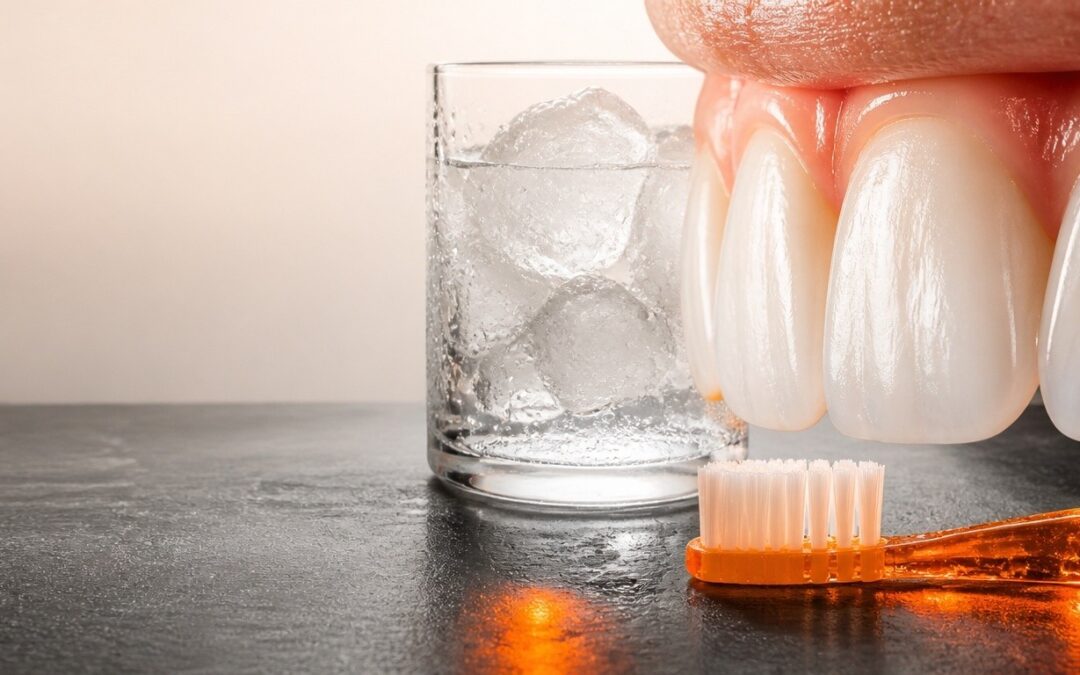
Ice water, a breath of cold air, a bite of chocolate — and a sharp jolt that stops you mid-sentence. Tooth sensitivity is one of the most common complaints in dentistry, and one of the most self-treated. Desensitizing toothpaste sells by the million, yet many people use it for years while the underlying cause quietly gets worse.
At Arrow Dental Arts, our Dentist In Rancho Cucamonga team treats sensitivity as a diagnostic question rather than a product recommendation. The right treatment depends entirely on which pathway to the nerve has been opened — and there are several.
Key takeaways
- Sensitivity means dentin is exposed and fluid movement inside its tubules is stimulating the nerve.
- Enamel wear, gum recession, acid erosion, grinding, cracked fillings and over-whitening are the six usual causes.
- Short pain that disappears quickly is usually exposed dentin; pain that lingers suggests decay or nerve inflammation.
- Desensitizing toothpaste helps mild cases in about two weeks but does not repair structure.
- Sudden or one-sided sensitivity needs an exam, not another tube of toothpaste.
Why do cold drinks hurt my teeth?
Under your enamel sits dentin, a layer packed with microscopic tubules that connect almost directly to the nerve. When enamel wears thin or gums recede, cold liquid shifts the fluid inside those tubules and the nerve registers it as pain. The thinner the covering, the sharper the jolt.
This is why sensitivity is a structural message, not a nerve malfunction. Somebody with intact enamel and healthy gums can drink ice water without flinching. If you cannot, something has changed — and that change has a specific cause worth identifying.
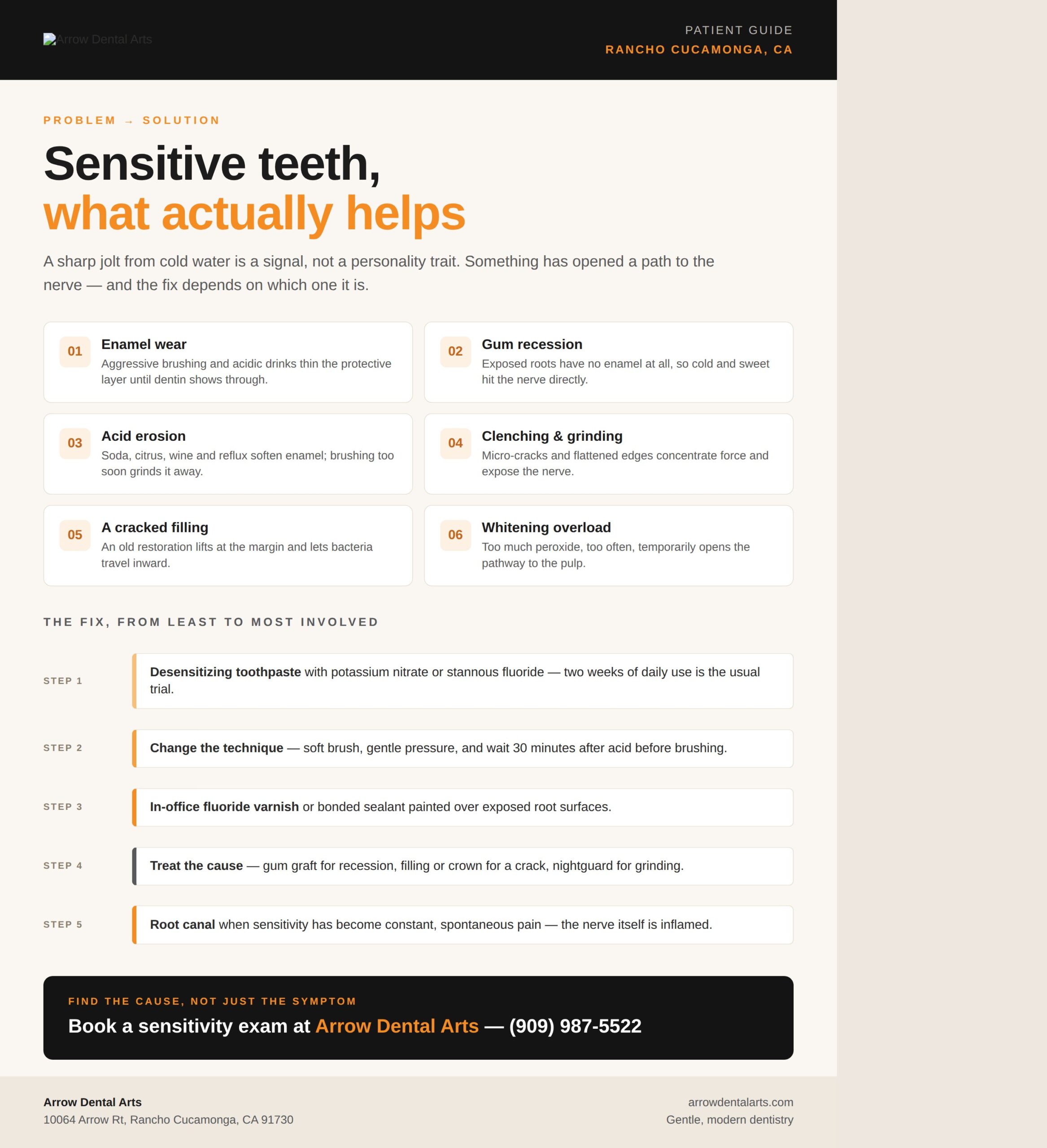
Six causes of tooth sensitivity
| Cause | What you notice | Usual fix |
|---|---|---|
| Enamel wear | Generalized cold sensitivity, flattened biting edges | Softer technique, fluoride, desensitizing paste |
| Gum recession | Yellow root surfaces visible, sensitivity at the gumline | Bonded sealant; gum graft for advanced recession |
| Acid erosion | Smooth, shiny, slightly cupped tooth surfaces | Diet changes, fluoride varnish, bonding |
| Clenching & grinding | Morning soreness, jaw tension, fine cracks | Nightguard, bite adjustment |
| Failed filling or crown | Pain on one tooth, worse when biting | Replace the restoration |
| Whitening overload | Sensitivity during and after whitening | Pause, use desensitizing gel, resume less often |
Note how different the fixes are. This is why a generic “sensitive teeth” toothpaste can feel like it works for a while and then stop: it dampens the nerve response without addressing recession, a cracked cusp or an acidic diet.
Sensitivity, cavity or infection?
| Pattern | Most likely | Next step |
|---|---|---|
| Sharp, brief pain to cold, gone within seconds | Exposed dentin | Desensitizing paste, then exam if unchanged in 2–3 weeks |
| Pain to sweets plus a visible dark spot | Cavity | Book a filling soon |
| Ache that lingers after the cold is gone | Inflamed nerve | Exam within days |
| Spontaneous pain, worse lying down, wakes you | Irreversible pulpitis | Same-day care |
Treatments, from least to most involved
Start with two weeks of desensitizing toothpaste. Potassium nitrate and stannous fluoride both reduce nerve excitability. Apply a thin layer at night and use it as your regular paste.
Fix the technique. A soft brush, light pressure and a 30-minute wait after acidic food or drink prevents most self-inflicted enamel loss. Many patients are surprised that this alone resolves their symptoms.
Add in-office protection. Fluoride varnish or a bonded sealant over exposed root surfaces creates a physical barrier and works immediately — useful when toothpaste has plateaued.
Treat the underlying structure. A gum graft covers exposed roots when recession is progressive. A filling or crown resolves a cracked tooth or leaking margin. A nightguard protects enamel from grinding forces.
Root canal is the last resort, reserved for cases where the nerve itself is irreversibly inflamed and sensitivity has become constant or spontaneous.
8 prevention tips that work
- Use a soft or extra-soft brush and let the bristles do the work — pressure is what wears enamel at the gumline.
- Hold the brush at 45 degrees and make small circles instead of horizontal scrubbing.
- Do not brush right after soda, citrus or wine. Wait about 30 minutes for enamel to re-harden.
- Drink acidic and sugary drinks with a meal, and use a straw when you can.
- Rinse with water after acid, and consider a fluoride or calcium rinse.
- Ask about a nightguard if you wake with jaw tension or a dull ache.
- Space out whitening and use desensitizing gel before and after each round.
- Keep your six-month checkup — recession and early erosion are visible to us long before they hurt you.
What to stop doing
Stop using a hard brush and pressing hard to “get them cleaner” — that is the single most common cause of gumline wear. Stop chewing ice, pencils and hard candy. Stop using sensitivity toothpaste as a permanent substitute for a diagnosis. And if the pain has changed character — from a quick flash to a lingering ache — stop assuming it is just sensitivity.
When patients in Rancho Cucamonga ask whether they need to see a Dentist In Rancho Cucamonga for sensitivity, our answer is usually: if it is new, one-sided, or getting worse, yes. A ten-minute exam with cold testing and an X-ray answers in one visit what months of guesswork cannot.
Get your sensitivity properly diagnosed
Arrow Dental Arts · 10064 Arrow Rt, Rancho Cucamonga, CA 91730 · Mon–Fri, 8:00 AM–5:00 PM
Frequently asked questions
Why are my teeth suddenly sensitive to cold?
Sudden sensitivity usually points to newly exposed dentin — from recession, enamel wear, erosion or a cracked tooth. New or one-sided symptoms deserve an exam rather than a product trial.
Does sensitive toothpaste really work?
Yes, for mild cases. Potassium nitrate and stannous fluoride reduce nerve response over about two weeks of daily use. They do not repair lost enamel or cover an exposed root.
Can sensitivity be permanent?
Untreated structural causes keep progressing, but sensitivity itself is usually manageable once the source is identified and treated.